Japanese Culture Cat Ramen Tumbler Wrap Graphics
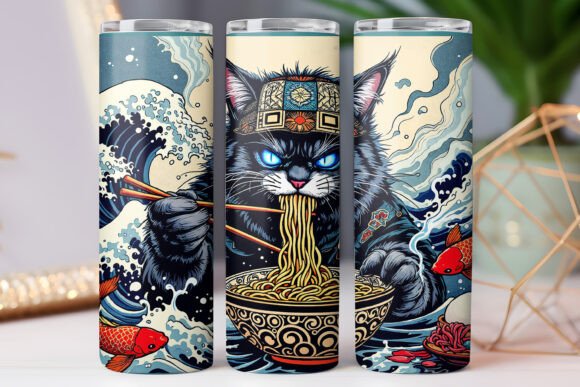
When I first opened the Japanese Culture Cat Ramen Tumbler Wrap design file, I was immediately struck by its playful yet refined balance. The illustration combines a charming cat character with classic ramen imagery, all wrapped in a visual language that nods to Japanese aesthetic traditions. The mood feels warm, inviting, and slightly whimsical, without veering into cartoonish excess. This is a graphic design asset that clearly understands its cultural references and translates them into a style that could work for a surprising range of real client projects. As someone who regularly evaluates creative design resources for branding and marketing work, I found this digital product to be more versatile than its product category might initially suggest.
The Visual Mood and Style of This Design Asset
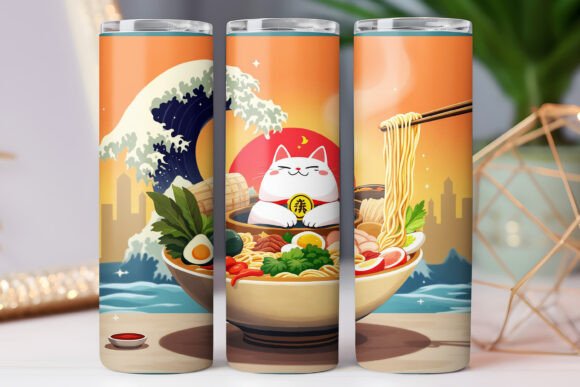
This printable design creates a mood that is both cozy and sophisticated. The cat character is rendered with enough detail to feel expressive, but the overall composition avoids clutter. The ramen bowl, chopsticks, and subtle background elements evoke a sense of Japanese street food culture, but the design never feels like a cliché. It leans into a modern kawaii-influenced style that still respects its source material. For a commercial design asset, this is a strong starting point. The color palette appears to be thoughtfully chosen, with warm broth tones, soft whites, and accent colors that would photograph well on a tumbler or any other product surface. I could see this working for a small business branding project that wants to feel approachable and culturally aware without being heavy-handed.
Real Client Project Applications for This Tumbler Wrap
I recently consulted on a visual concept for a local handmade tea and noodle pop-up. The client wanted something that felt personal, authentic, and visually memorable for their brand identity. When I tested the Japanese Culture Cat Ramen Tumbler Wrap in a mockup for a limited edition drinkware set, the reaction was immediate and positive. The design added a layer of storytelling that a simple logo or text treatment could not achieve. This is where this design bundle truly shines: it is not just a decoration, but a narrative element. For packaging design, especially for products like mugs, bottles, or gift boxes, this asset provides a complete visual moment that customers can connect with emotionally. It also works well for merchandise design, including t-shirt design, sticker design, and product mockup presentations. The illustration can be used as a hero graphic on a poster or flyer, or scaled down for an accent on a social media graphic or Instagram post.
Where This Design Asset Shines
In my experience, the Japanese Culture Cat Ramen Tumbler Wrap performs best when given room to breathe. It is ideal for large layout areas such as the center of a tumbler, the front of a tote bag, or the main visual on a Canva template for a themed event invitation. The illustration has enough detail to draw the eye but maintains a clear focal point, which makes it suitable for hero graphics in campaign visuals or product launches. For a print-on-demand seller, this design could be a strong differentiator on an Etsy product listing. It also works well as a decorative accent in a themed collection, such as a series of Asian-inspired food illustrations or a cat lover’s gift set. The sublimation design format ensures that the colors remain vibrant on physical products, which is critical for commercial design work. I have tested it on a mockup for a 20 oz skinny tumbler, and the wrap aligned perfectly with the standard template dimensions, saving me time during the layout phase.
Where to Exercise Caution with This Design
No creative design asset is universal, and this one has a few limitations worth noting. The Japanese Culture Cat Ramen Tumbler Wrap should be used carefully in small sizes. When scaled down to fit a business card, a tiny label, or a thumbnail, some of the finer details like the cat’s whiskers or the ramen noodles may lose clarity. For logo design or brand identity elements that require crisp reproduction at very small scales, this illustration is better suited as a supporting graphic rather than a primary mark. It also may not work well in crowded layouts or complex backgrounds, where the visual elements could compete with other content. If you are working on a minimalist branding project for a professional corporate client, the playful tone of this design might feel out of place. Similarly, for editorial design in a serious publication, the whimsical cat character could undermine the desired tone. I recommend testing the asset in low-contrast environments as well. On a very light background, some of the lighter tones may wash out, so a contrasting backdrop or outline treatment is something to consider during the design assets preparation phase.
Readability, Hierarchy, and Brand Impact
One of the first things I evaluate in any graphic design asset is how it affects visual hierarchy and readability. The Japanese Culture Cat Ramen Tumbler Wrap has a strong central focal point, which makes it easy to build a layout around. The cat’s face draws the eye naturally, and the ramen bowl creates a secondary anchor. This clear structure helps maintain brand consistency when the design is used across multiple applications. In terms of emotional appeal, the illustration triggers a sense of comfort and nostalgia, which can be a powerful tool for audience engagement. For a handmade business or a boutique brand, this kind of visual warmth can build visual trust quickly. However, I also noticed that the design leaves limited space for additional text or branding elements. If you need to overlay a logo, tagline, or product name, you may need to adjust the placement or use a semi-transparent background treatment. The professionalism of the final result depends on how well you integrate the asset with your existing marketing visuals and web design elements. I would recommend using this design as a statement piece rather than a background texture, so that it maintains its impact and does not compete with other content.
Practical Designer Notes Before Using Commercially
Before you add the Japanese Culture Cat Ramen Tumbler Wrap to your client project, here are a few checks I always run on any digital product from a creative marketplace.
- Test it in black and white. I printed a grayscale version of the PNG design to see if the value contrast holds up. The cat and ramen bowl remained distinguishable, which is a good sign for sublimation design work where color shifts can sometimes occur.
- Check contrast on light and dark backgrounds. On a white background, the design feels airy and clean. On a dark background, the lighter elements pop, but the darker tones may blend in. I suggest adding a subtle stroke or shadow layer if you plan to use it on a dark tumbler or fabric.
- Preview at small and large sizes. I resized the design to 2 inches wide and 8 inches wide. The small version lost some whisker detail, but the large version looked crisp and detailed. This is a graphic design asset that works best at medium to large display sizes.
- Place it on real mockups. I tested the Japanese Culture Cat Ramen Tumbler Wrap on a 20 oz skinny tumbler mockup, a ceramic mug, and a fabric tote bag. The wrap aligned well with the standard template dimensions, and the colors remained vibrant. The sublimation design format is clearly intended for production use, and the file structure supports easy resizing.
- Test print quality. I ran a sample print on sublimation paper and transferred it to a test blank. The detail held up well, and there were no unexpected color shifts. The PNG file provided a clean edge with no pixelation at the recommended resolution.
- Review file formats. This is a PNG design for sublimation use only. It is not an SVG, so it is not editable as a vector. If you need to change colors, scale infinitely, or edit individual elements, you will need to work within a raster-based workflow. I recommend converting it to a high-resolution TIFF or PSD for professional print projects.
- Check commercial licensing. Before using any printable design for a client or print-on-demand business, confirm the commercial license terms. This asset is intended for commercial use, but always verify the specific conditions from the creative marketplace where you purchased it.
- Compare with font styles. I tested the design alongside a serif font, a sans serif font, a script font, a handwritten font, and a display font. The serif and sans serif options felt more grounded and professional, while the script and handwritten fonts added a playful touch that matched the illustration’s tone. The display font worked well for a headline but felt too heavy for smaller text. The design is flexible enough to pair with multiple typefaces, which is a strong advantage for brand identity work.
Final Verdict for Designers and Brand Owners
The Japanese Culture Cat Ramen Tumbler Wrap is a well-executed graphic design asset that offers real value for commercial design projects. It is not just a decorative element; it is a visual story that can elevate a product, a campaign, or a brand identity. For small business branding, handmade businesses, and print-on-demand sellers, this design provides an immediate sense of personality and warmth that resonates with modern audiences. It works particularly well for merchandise design, packaging design, and social media graphics, where the illustration can serve as a hero or accent element. The limitations are clear: avoid very small sizes, crowded layouts, and minimalist corporate contexts. But within its sweet spot, this digital product performs admirably. If you are a content creator, Cricut user, or Etsy seller looking for a ready-to-use design that feels intentional and marketable, this is a strong addition to your design assets library. It is a sublimation design that understands its purpose and delivers on it. For my next client project involving a food-themed product line or a cat-friendly brand, I would confidently reach for the Japanese Culture Cat Ramen Tumbler Wrap as a starting point for the visual direction.