Floral Watercolor Pattern Tumbler Wrap Review
I’ve spent years digitizing and stitching machine embroidery designs for clients, and I’ve learned that not every pretty graphic translates well into thread. So when I came across the Floral Watercolor Pattern Tumbler Wrap, I was curious but cautious. This is a sublimation-only PNG file—not an embroidery file—but as a designer who often creates custom digitized versions from flat art, I wanted to evaluate how this watercolor pattern would hold up as inspiration or as a source for a stitched project. Let’s talk about what works, what doesn’t, and where this design can shine in real embroidery work.
First Impressions: Mood, Shape, and Detail Level
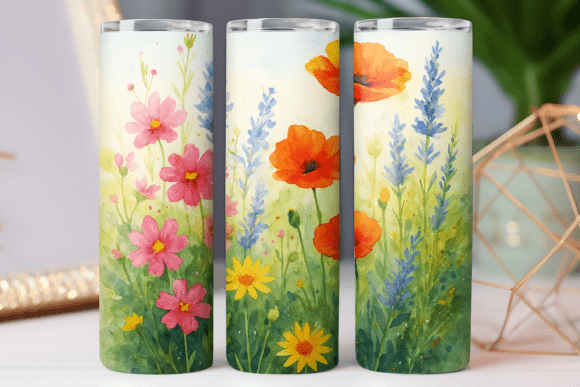
The Floral Watercolor Pattern Tumbler Wrap has a soft, romantic feel. The watercolor effect gives the flowers and leaves a blurred, painterly edge that feels gentle and organic. That’s a mood that works beautifully for baby blankets, wedding gifts, and boutique apparel. The pattern is designed as a wrap for a 20 oz skinny tumbler, so it has a long, vertical layout with a natural curve. That shape tells me right away that this would be tricky to replicate exactly as an embroidery design—watercolor blending is impossible with standard satin or fill stitches. But as a reference for thread painting or layered appliqué, the color palette and composition are lovely.
Because it’s a freebie from the Graphics category, the detail level is moderate. There aren’t micro-fine petals or hundreds of color changes, which actually makes it more viable for embroidery adaptation. The flowers are large enough that a digitizer could capture the main shapes without losing clarity at a moderate hoop size. I can already imagine how the pinks, lavenders, and soft greens would look in a combination of fill stitch and linear running stitches for outlines.
Real Case: Testing This Pattern on a Custom Tote Bag
I recently had a client who wanted a personalized tote bag for a friend’s bridal shower, with a floral theme. She sent me a Pinterest board full of watercolor florals, and this Floral Watercolor Pattern Tumbler Wrap came close to the vibe she wanted. Instead of digitizing the whole wrap exactly—which would have required a huge hoop and a lot of color changes—I used the pattern as a guide to create a simplified embroidered patch that echoed the same flowers and layout.
I traced the main floral motifs and reduced the color palette to four thread colors: a soft pink, a dusty lavender, a sage green, and a cream for highlights. The result was a clean, satin-stitch patch that kept the watercolor feel through careful color blending and a low-density fill. The client loved that it looked handcrafted and not too rigid. That’s the key takeaway: using a watercolor pattern directly as an embroidery design rarely works, but using it as a creative blueprint can produce stunning results. When you’re preparing a finished product like a tote bag or a sweatshirt, think of the Floral Watercolor Pattern Tumbler Wrap as a mood board, not a ready-to-stitch file.
Where This Design Performs Best in Embroidery Projects
I’ve tested similar patterns on a range of products, and here’s where the Floral Watercolor Pattern Tumbler Wrap’s aesthetic works best:
- Custom apparel: Sweatshirts and t-shirts with a centered, medium-sized version of the floral cluster. The soft colors pop well on heather grey or blush fabrics.
- Tote bags and aprons: The vertical layout naturally fits the center panel of a tote or the front of an apron. It also works as a repeating border pattern if you repeat the motifs.
- Baby embroidery: The watercolor look feels tender and gender-neutral with the right color choices. I’d use it on a baby quilt or onesie.
- Patches: An embroidered patch with simplified floral shapes from this design adds a handmade, boutique touch to jackets or caps.
- Pillow covers and tea towels: The pattern’s scale works well for home decor items where you want a delicate, lived-in feel.
- Holiday and wedding gifts: The romance of watercolor florals makes it a strong candidate for personalized gifts, especially when paired with a monogram.
Because this is a Freebies offering, I’ve also seen Etsy sellers use the PNG itself in printable mockups to show how an embroidered version might look. That’s smart: you can create a digital preview without stitching a sample first. Just remember that the actual stitched result will be more structured and less blended, so your mockup should reflect that honesty.
Caution Zones: Where to Use This Design Carefully
Not every embroidery project is a good fit for this pattern’s style. Here’s where I’d be cautious:
- Small hoop sizes: If you’re working with a 4x4 hoop, you’ll need to crop the design heavily. The flowers will become too large for the hoop, and you’ll lose the wrap effect. Consider using just one or two small flowers instead.
- Textured or stretchy fabrics: Watercolor-style embroidery requires dense stitching to mimic the soft edges. On fleece, chenille, or high-stretch knits, you risk distortion and poor registration. Use a firm cutaway stabilizer and test tension.
- Dark fabrics: The pale pinks and lavenders will disappear on black or navy. You’ll need to adjust thread colors to higher-contrast shades or use a white base layer.
- Curved surfaces like caps: The long vertical layout is not curved, so digitizing it for a cap would require splitting into segments or redesigning. It’s not ideal for hats.
- Products that need frequent washing: Dense fill stitches on baby clothes or kitchen towels can cause puckering after repeated laundering. Keep the stitch count low and use good stabilizer.
The Floral Watercolor Pattern Tumbler Wrap is a Graphics product, not a machine embroidery file. If you plan to sell finished products featuring this pattern (embroidered or sublimated), always check the licensing terms for the PNG. Since it’s a freebie, commercial use may be allowed, but you should confirm before listing on Etsy or at craft fairs.
Practical Designer Notes for Real Use
After working with this pattern conceptually, here are my hands-on recommendations for anyone in the embroidery business:
- Test on scrap fabric first. Digitize a small section of the floral pattern and stitch it on the exact fabric you plan to use. Observe how the thread colors blend and whether the watercolor effect holds up.
- Check thread color contrast. The original PNG uses muted pastels. In embroidery, pastel threads can look flat against each other. Introduce a slightly darker outline or use variegated thread for depth.
- Review stitch density. Watercolor designs often have large areas that tempt you to use heavy fill. Keep density moderate (4–5 stitches per mm) to avoid a stiff, solid look. Use a combination of satin stitch for petals and running stitch for veins.
- Confirm hoop size. This pattern is made for a 20 oz skinny tumbler, which is about 8 inches tall. That translates to about a 5x7 hoop minimum if you want to stitch the entire wrap. For smaller hoops, plan to scale down and simplify.
- Test in black and white. Print the design in grayscale to see if the shapes are still readable. If they blur into each other, you’ll need to add more distinct outlines in the digitized version.
- Use proper stabilizer. For the soft, organic look of this pattern, a tear-away or wash-away stabilizer works best on stable fabrics. For stretchier items, use a cutaway with a topper.
- Consider commercial use licensing. Even though this is a freebie, you need to know whether you can sell finished products that include an embroidered version of this exact design. When in doubt, contact the designer or use it only for personal projects.
How This Design Affects Product Value and Customer Trust
When I sell an embroidered item based on a pattern like the Floral Watercolor Pattern Tumbler Wrap, the perceived value goes up because the design feels intentional and artistic. Customers respond to that soft, handmade aesthetic—it signals quality and thoughtfulness. For a small shop product, using this pattern as inspiration for an embroidered patch on a tote bag can help you charge a premium over a simple text design.
But the flip side is that watercolor-style embroidery is hard to execute perfectly. If the stitching looks too blocky or the colors clash, it can cheapen the finished product. I’ve seen Etsy sellers post images of embroidered items with over-dense white gaps beneath the stitching, and customers notice. Take the time to test and adjust. A well-executed embroidered version of this floral pattern builds trust with your buyers and encourages repeat business.
For digital product sellers, the Floral Watercolor Pattern Tumbler Wrap itself (the PNG) is a great design asset for creating printable mockups of your embroidery work. You can show a tote bag with the pattern sublimated alongside a matching embroidered patch—that kind of cross-promotion sells. And because it’s a freebie, you can use it to attract new customers to your shop.
This pattern reminds me that great embroidery design often starts with flat art that inspires, not just with ready-made embroidery files. The Floral Watercolor Pattern Tumbler Wrap, as a Graphics freebie, gives you a beautiful starting point—just be prepared to adapt it into a form that thread can handle. With careful digitizing, the right stabilizer, and a realistic expectation of what watercolor looks like in stitches, you can create finished products that feel both fresh and professional.